

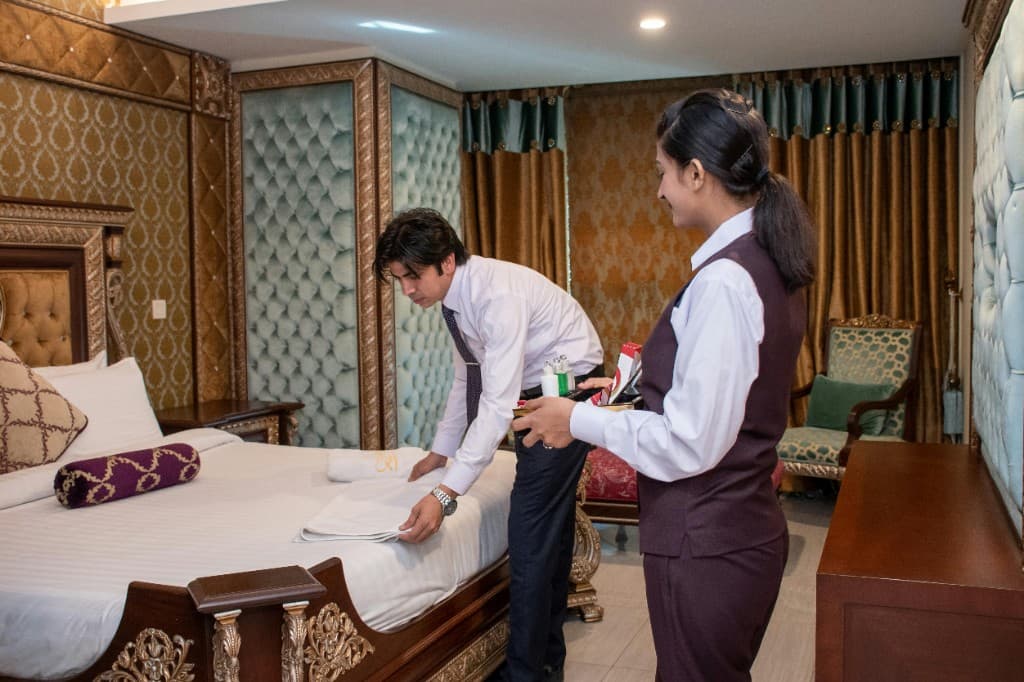
Most people enter hospitality through customer-facing roles such as waiting tables, bartending, working reception or supporting kitchen teams. These roles develop valuable skills and provide a strong foundation for a hospitality career. However, the pathway from frontline service into management is not always clearly defined, which can make it harder to understand what steps are needed to progress.
Hospitality does offer progression routes, but they usually involve active development. This includes building specific skills, gaining broader operational knowledge and, in many cases, pursuing formal qualifications. Understanding what each level involves helps you plan your career strategically rather than hoping opportunities appear.
This overview examines realistic career progression in hospitality, explaining what each level requires, how long progression typically takes and what speeds up or blocks advancement.
Entry-Level Customer Service
Most hospitality careers begin in direct service roles such as waiting tables, working bars, staffing reception desks, serving in cafés or supporting kitchen teams. These roles are high-energy and people-focused, placing you at the heart of the guest experience. They form the foundation of hospitality careers because they provide first-hand insight into how service operations run in real environments. Working on the frontline builds practical understanding of customer expectations, teamwork and service standards. You see how different departments interact, how busy periods are managed and how quality is maintained under pressure. This experience gives you credibility later in your career because effective managers understand the realities of service delivery and can make decisions grounded in real operational knowledge.
What You Learn
Entry-level positions teach operational basics that matter more than they initially appear. You learn how service flows work, how to use point-of-sale systems and how to follow procedures without slowing down during busy periods. You develop speed and efficiency because hospitality operates in dynamic, fast-moving environments, and you build resilience by working with a wide range of guests and situations. Beyond technical skills, you also see how businesses actually function day-to-day. You notice when coordination breaks down, when stock runs low or when scheduling creates problems. This operational awareness becomes valuable later when you're managing rather than just executing tasks.
Customer service roles teach you to read situations quickly, stay calm under pressure and maintain standards even when exhausted. These soft skills matter throughout hospitality careers because management is fundamentally about working with people under challenging circumstances.
How Long People Stay Here
Some people remain in entry-level roles indefinitely by choice - working part-time while studying or preferring straightforward work without extra responsibility. However, if you're working full-time in hospitality and want career progression, staying in basic service roles beyond two or three years often means other priorities or barriers are making it harder to actively pursue advancement. This isn't a criticism, but it's worth being honest about whether you're content where you are or feeling ready to explore next steps.
What Keeps People Here
Several factors can slow or limit progression from entry-level roles. Sometimes it's not knowing what advancement requires - you might assume good performance automatically leads to promotion when actually you need to actively seek additional responsibility and explicitly express interest. Sometimes it's structural - you're working in small businesses where the owner manages everything and there are only frontline positions available. No matter how capable you are, there's nowhere to progress internally unless someone leaves or the business expands. Sometimes it's skills gaps that aren't obvious from your current role. You might be an excellent server but still be developing the written communication needed for completing reports or the confidence necessary for directing other staff. These gaps only really become visible when you start aiming for the next step.
Supervisory Roles
The first step up from entry-level service involves taking responsibility for specific shifts, sections or functions. Job titles vary but commonly include shift supervisor, team leader or section manager. These roles bridge frontline service and full management, giving you coordination and decision-making responsibilities without the full weight of operational accountability.
What Supervisors Do
Supervisors handle operational coordination during their shifts. You might oversee restaurant sections, manage bar service, coordinate hotel front desk overnight or supervise kitchen prep. You still do hands-on work but you're also ensuring others work effectively and dealing with problems as they occur. This involves assigning tasks, monitoring service flow, handling customer issues that staff can't resolve and making decisions about immediate operational problems without always being able to consult senior managers. You become the person staff turn to when something goes wrong or when they're unsure how to handle a situation.
Supervisory roles also introduce administrative work - completing shift reports, handling stock checks or contributing to rotas. This paperwork teaches you how information flows through hospitality businesses and why documentation matters for tracking patterns and making informed decisions.
Skills That Matter
Moving into supervision requires a shift from focusing solely on your own tasks to supporting the performance of others. Leadership capability becomes essential, including motivating team members, providing clear direction and maintaining morale during busy or challenging shifts. Supervisors also need confidence in making decisions and taking responsibility for outcomes, even when those decisions are not always popular.
Communication becomes more complex at this level. Supervisors manage upward to senior managers, downward to team members and across to other supervisors, adapting their approach to suit different audiences and operational priorities. They are also expected to resolve routine operational issues independently, assessing situations as they arise and implementing practical solutions within their level of authority. This balance between independent decision-making and knowing when to escalate issues is a key step in preparing for wider management responsibilities.
How to Move Up
Progression into supervisory roles usually begins with consistently demonstrating reliability in your current position. This includes maintaining standards, supporting colleagues and responding well during busy periods. Taking on additional responsibility can help signal readiness for progression, such as volunteering to train new staff, supporting shift organisation or assisting with basic administrative tasks. These actions show that you are thinking beyond your own role and are willing to contribute to wider team performance.
More structured progression often comes from clear communication with management. Discussing your career intentions with managers helps clarify expectations and allows you to understand what skills or experience you need to develop. Some employers provide internal training or development opportunities, while others expect individuals to demonstrate capability through increased responsibility before offering formal promotion. In both cases, progression tends to be more effective when it is actively planned rather than left to chance.
Typical Timeframe
People typically spend two to three years in supervisory positions if progressing toward management. This allows you to develop confidence, handle a range of challenges and demonstrate consistent performance. Supervisory roles serve as testing grounds - employers assess whether you can handle pressure, manage people effectively and maintain standards without constant oversight.
Junior Management
Junior management represents the first formal management level. Titles include assistant manager, duty manager or operations coordinator. These roles involve broader responsibility than supervision, covering multiple shifts, departments or functions.
What Junior Managers Do
Junior managers handle day-to-day operations across their area of responsibility. In restaurants, this may involve managing front-of-house or kitchen operations, while in hotels it could include overseeing housekeeping, reception or food and beverage departments. The role involves coordinating staff, managing rotas, working with suppliers and ensuring service standards are consistently met. Junior managers are also involved in recruitment, from interviewing candidates to making hiring recommendations, as well as conducting performance reviews, managing staff development and addressing disciplinary matters when required. They are often responsible for resolving more complex customer complaints that require policy interpretation or decisions around compensation.
Financial responsibility increases at this level. Junior managers monitor costs, manage budgets within their area, identify wastage and contribute to purchasing or pricing decisions. They are accountable for their department’s performance and are expected to understand how operational decisions affect both service quality and financial outcomes.
Required Skills
Junior management requires a broader business understanding than supervisory roles. At this level, you need to think beyond immediate operations and consider how decisions affect costs, customer satisfaction and staff retention. Balancing multiple priorities becomes a regular part of the role, requiring judgement about what needs immediate attention and what can be addressed over time.
People management becomes a central responsibility. Junior managers are accountable for team performance, which includes addressing underperformance, recognising achievement and maintaining motivation. Managing interpersonal issues and building effective team dynamics is an ongoing part of the role, particularly when working with colleagues who may previously have been peers.
Administrative capability is also more important at this stage. Junior managers complete reports, analyse performance data and communicate regularly with senior management. Clear written communication and basic numeracy skills are essential for managing budgets, tracking performance and supporting informed decision-making.
How to Reach This Level
Moving into junior management typically requires proven supervisory experience, often supported by additional qualifications or training. Many employers expect at least a Level 3 qualification in hospitality or business, although extensive experience may sometimes substitute.
Demonstrating readiness involves showing you can think beyond your immediate responsibilities - suggesting operational improvements, identifying cost savings or taking initiative on projects beyond your job description.
Internal promotion is common in larger hospitality businesses. Smaller businesses might require you to move externally to access management roles.
Some people accelerate progression by pursuing hospitality management qualifications while working, demonstrating commitment and providing structured knowledge that complements practical experience.
Typical Timeframe
People typically reach junior management after four to six years in hospitality, though this varies considerably. Those with formal qualifications often progress faster. Junior management roles might last two to three years depending on business size and growth.
Senior Management
Senior management includes general managers, operations managers or regional managers. These roles involve strategic responsibility, budget management and accountability for overall business performance.
What Senior Managers Do
Senior managers are responsible for the overall performance of a business or, in some cases, multiple sites. Their role goes beyond day-to-day operations and focuses on profitability, service standards, staff wellbeing and long-term development. Senior managers set strategic direction, make high-impact financial decisions, negotiate with suppliers and often represent the business to owners, investors or senior stakeholders.
At this level, leadership becomes less about direct involvement and more about developing others. Senior managers lead through their management teams, coaching junior managers, setting clear performance expectations and holding individuals accountable for results. Building strong leadership capability across the organisation is a key part of the role.
Senior managers also manage external relationships that affect how the business operates. This includes working with licensing authorities, health and safety inspectors, regulatory bodies and business partners, ensuring compliance while protecting the organisation’s reputation and commercial interests.
Required Skills
Senior management requires strategic thinking - anticipating industry trends, understanding competitive positioning and planning for various scenarios. You make decisions with incomplete information, balancing risks against potential rewards.
Financial understanding becomes essential. You're accountable for budgets potentially worth hundreds of thousands or millions of pounds. You need to understand financial statements, identify performance indicators and explain results to non-financial stakeholders.
At this level, leadership is about setting clear direction and supporting others rather than closely managing every task. Senior managers explain what the business is trying to achieve, encourage the right behaviours and help managers develop the confidence and skills to run operations independently.
Reaching Senior Management
Progression into senior management typically requires substantial experience, often supported by formal qualifications. Many senior managers hold Level 5 qualifications in hospitality management or business, with some progressing to bachelor’s degrees.
Moving into these roles involves demonstrating success at junior management level, delivering measurable results and showing strategic capability. Many senior managers have gained experience across multiple hospitality sectors or businesses.
Typical Timeframe
Reaching senior management often takes several years in hospitality, commonly around eight to twelve, although this varies depending on education, opportunity and individual capability. Those with strong qualifications, broad experience and a track record of consistent results may progress more quickly.
What Speeds up Progression
Several factors consistently accelerate hospitality career progression.
Formal Qualifications
Hospitality management qualifications accelerate progression by providing structured knowledge that complements practical experience. A Level 5 HND teaches financial management, human resources, strategic planning and operational systems, reducing the time needed to learn these through trial and error.
Employers increasingly prefer candidates with formal education for management positions. While experience remains valuable, qualifications demonstrate commitment and provide frameworks for thinking about business challenges systematically.
Diverse Experience
Working across different hospitality sectors helps broaden your understanding of how the industry operates. Experience in areas such as hotels, restaurants, events and catering exposes you to different service models, customer expectations and operational challenges. This wider perspective supports stronger decision-making and adaptability as responsibilities increase.
Gaining experience in both independent businesses and corporate chains also provides valuable insight into different operational approaches. Independent venues often offer flexibility and hands-on responsibility, while larger organisations expose you to structured systems, formal processes and wider career pathways.
Taking Initiative
People who progress faster consistently look for opportunities to contribute beyond their job descriptions. This can include suggesting practical improvements to service flow, stock management or scheduling, helping with staff training or onboarding, or supporting the introduction of new systems and procedures. Some take initiative by identifying recurring issues, such as customer complaints, staff shortages or operational inefficiencies, and proposing realistic solutions rather than waiting for direction.
Taking this kind of initiative demonstrates management potential because it shows an ability to think beyond day-to-day tasks and consider how decisions affect the wider operation. It also signals reliability, problem-solving capability and a willingness to take responsibility, all of which are valued at supervisory and management levels.
Building Relationships
Hospitality careers often progress through professional networks. Managers are more likely to consider people they know, trust or who come recommended, particularly for supervisory and management roles. Building positive working relationships with managers, colleagues and industry contacts can create opportunities that are not always publicly advertised.
This involves being professional, reliable and consistent in your work, as well as communicating clearly and working well with others. Over time, a strong professional reputation can support progression by increasing visibility and trust within the industry.
Continuous Learning
The hospitality industry evolves constantly, shaped by changing customer expectations, technology and operating practices. People who stay current by engaging with industry publications, attending training and adapting to new ways of working often progress more effectively than those who are slow to change. Viewing challenges and setbacks as learning opportunities, rather than failures, also supports long-term development and resilience.
What Blocks Progression
Understanding what prevents progression is equally important.
Skills Gaps
Many people plateau because they are still building some of the skills needed for the next level - for example, numeracy for financial management, written communication for administrative work or confidence for leadership responsibilities. These gaps aren't always obvious until you attempt progression, which is why support, feedback and training matter.
Limited Opportunities
Some barriers relate to opportunity rather than capability. Small businesses offer fewer management positions. Businesses with long-serving managers rarely have vacancies. If you're ready for more responsibility but not progressing, the issue might be your employer or location. Being open to moving between employers or, where realistic, relocating can sometimes create new options.
Lack of Qualifications
Increasingly, management positions specify formal qualifications alongside experience. Employers often use qualifications as screening criteria when multiple candidates apply, meaning applications without them may receive less consideration.
Planning Your Progression
Understanding career progression allows you to plan rather than simply hoping for opportunities. Consider where you want to be in five years and work backwards to identify necessary steps.
If you're in entry-level service and want to progress into management, this often involves moving into a supervisory role within the next one to two years, followed by junior management within four to six years. This usually means actively seeking additional responsibility, potentially pursuing qualifications and, in some cases, changing employers.
If you're in supervisory roles, progression typically depends on developing management skills, possibly pursuing formal education and demonstrating readiness for increased responsibility. This may involve taking on projects beyond your job description or gaining experience in unfamiliar areas.
If you're in junior management aiming for senior roles, progression generally requires developing strategic thinking, strengthening financial capability and gaining broader operational experience. This often includes working across multiple areas or businesses and completing higher-level qualifications.
Be realistic about timescales. Progression takes time, and attempting to move too quickly often results in being overwhelmed. Equally, don't wait passively for progression to happen.
Education as a Progression Tool
Formal hospitality management education serves multiple purposes. It provides structured knowledge that would take years to acquire through experience alone. It demonstrates commitment to employers. It creates credentials that qualify you for positions requiring specific education levels.
A Level 5 HND in Hospitality Management teaches financial management, human resources, marketing, operations and strategic planning - exactly the skills required for junior and senior management positions. Completing this while working accelerates progression by developing capabilities that would otherwise take years of on-the-job learning.
The qualification can make you eligible for management positions that require specific education levels. Many employers list Level 5 qualifications as essential or desirable criteria, particularly for structured management roles. Without meeting these requirements, opportunities may be more limited, regardless of experience.
Getting Information
If you're considering hospitality management education to accelerate your career progression, the HND in Hospitality Management offered through LCK Academy in partnership with University Centre Somerset College Group provides Level 5 education designed for people working in hospitality.
The blended learning structure, with online sessions on Mondays and Thursdays and in-person classes on Sundays, accommodates hospitality work schedules. The programme covers operational management, financial skills, human resources, customer experience, digital marketing and strategic planning.
Tuition fees of £8,250 per year are covered through Student Finance for eligible students, with repayment only starting once you're earning above the threshold.
Contact LCK Academy:
Email: admissions@lckacademy.org.uk
Phone: 020 8161 3300
The team can help with understanding entry requirements, explaining how the programme works with hospitality schedules, discussing Student Finance eligibility and connecting you with current students or graduates.
The academy is based in Harrow, North West London, accessible via the Metropolitan line and local bus routes.
Final Thoughts
Career progression in hospitality is achievable with the right planning, skill development and commitment. Understanding how roles build from frontline service through supervision and management helps you make informed decisions rather than waiting for opportunities to appear.
The industry rewards reliability, initiative and continuous learning. By building experience alongside relevant qualifications, you position yourself for progression into leadership roles with greater responsibility and influence.
For those looking to accelerate their development, structured education can make a significant difference. Programmes like the HND in Hospitality Management at LCK Academy provide the knowledge, confidence and credentials needed to move from operational roles into management and beyond.
Entry requirements, programme details and contact information are subject to change. Check lckacademy.org.uk for current information before applying. Confirm funding eligibility directly with Student Finance England.